

What do the different cup sizes mean?

Choosing a cup might seem simple, but the letter in the size carries more meaning than what’s visible on the tag. The letter indicates the cup’s volume, but this volume changes with the band size, which is why 75C is not the same as 85C. The sizing system works like interconnected vessels: when you decrease the band, you often increase the letter to maintain a similar volume. The cup’s design affects the shape of the breasts, which is why the size alone rarely guarantees a perfect fit.
Different cup types shape the neckline in different ways, so it’s worth knowing their functions and limitations. A properly fitted cup encompasses all breast tissue, with the underwire sitting just behind it, ensuring comfort and support. This guide will walk you through letters, cuts, and fitting tests, so you can shop wisely and avoid mistakes.
Practical cup letters: how the scale and “sister” sizes work
The letter scale increases gradually, but brands use different sequences, so after D there might be E or DD. The cup volume increases with the letter, but its real capacity depends on the band, so 70E can be similar in volume to 75D. These relationships create so-called sister sizes, which allow you to adjust the band without losing cup volume.
If the band feels loose, you can go down one band size and increase the letter to regain stability. If the band is tight, do the opposite, because a larger band often requires a smaller letter. Remember, the letter doesn’t measure breast size, as the same letter on a different band creates a different look. For guidance, use brand size charts, but always verify the fit on your body, because breast shape affects size perception.
Key rules to remember:
• Letter = volume, but volume depends on the band, so compare within the same brand.
• Sister sizes save the fit when the band “doesn’t sit right,” so try two neighboring options.
• The tag is a starting point, not a verdict, so look at the underwire placement, padding, and center gore.
Cup types: how they shape the neckline and who they suit best
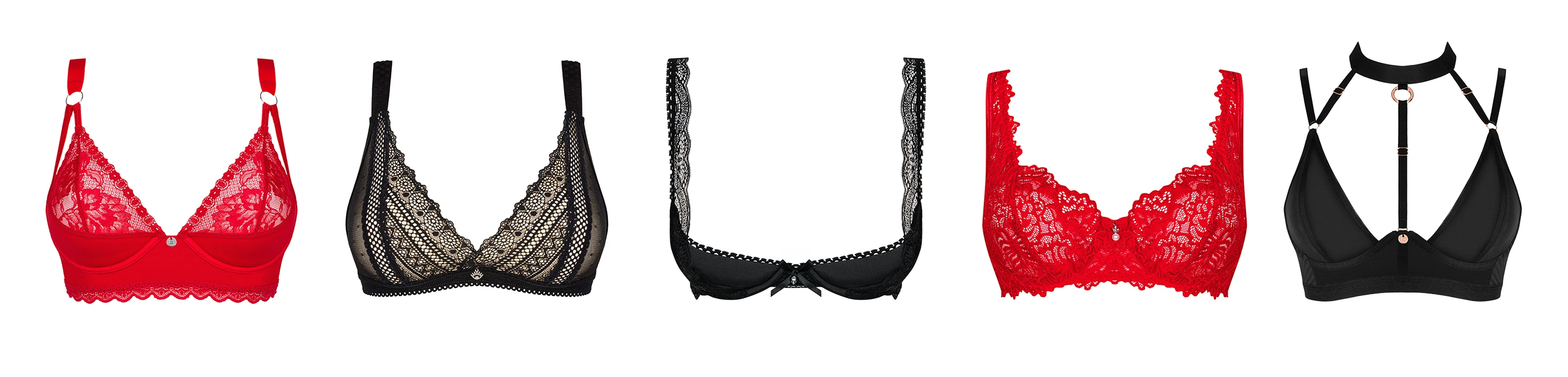
The cup cut determines the neckline, so the style choice should reflect breast shape and occasion. Full cup covers most of the breast, stabilizing soft or fuller busts that need gentle support. Balconette lifts from below and creates a horizontal line, perfectly enhancing without closing the neckline. Plunge has a low center gore, bringing the breasts together and showcasing deep necklines in wrap dresses. Half-cup (lightly lined or soft) offers a wide, open neckline, ideal under square necklines. Push-up adds volume and brings breasts closer, but it’s not suitable for all shapes, as it can be too aggressive. Soft underwire cups shape breasts naturally, while moulded cups create a fixed shape, making styling easier.
Choose a cut based on function:
• Smooth under T-shirts: moulded or spacer cups, as they don’t show through fabric.
• Support and lift: full cup or side support, since side panels shift tissue toward the center.
• Deep neckline: plunge with a low center gore, so the bra line stays hidden.
• Lift and open line: balconette or half-cup, highlighting the collarbones.
Depth, width, and projection
Cups differ not only by letter but also by shape; one style may be deep, another shallow. Breasts with high projection need a deep cup to contain volume in front without creating a “quad-boob.” Widely set breasts work better with a wider underwire and a lower cup that doesn’t dig under the arm. Too shallow a cup causes spillage at the edge, while too deep leaves empty space at the top.
The height of the center gore affects how close the breasts sit together, so lower gores can be safer for asymmetry or sensitivity. Strap width and placement influence shoulder comfort, as straps set too wide can slip off. Knowing your projection and spacing reduces guesswork, helping you target cuts made “for your shape.”
Cup fitting test: a quick checklist that saves the day
Evaluate the fit on multiple levels, since one signal can be misleading. The center gore should touch your chest, and the underwires must encircle all breast tissue without digging in. The cup edge shouldn’t cut or ripple, as both indicate poor depth balance. The band should act as the main support, so don’t rely on straps to fix fit issues. Bend forward and lift your arms, then adjust the breasts in the cups, because movement reveals mistakes. Check marks after removing the bra, as deep impressions indicate pressure in the wrong place. If unsure, try a sister size and compare positioning along the side and center gore.
Step-by-step checklist:
• Center gore lies flat, and the underwire ends behind the tissue, so no “cutting” of the breast.
• Cup edges lie smoothly, with no double-boob or empty space.
• Band stays in place, as 80% of support comes from it, not straps.
• Straps stabilize but don’t lift, so they don’t dig into shoulders.
• Breasts stay in place after movement, confirming proper depth.
Obsessive bras
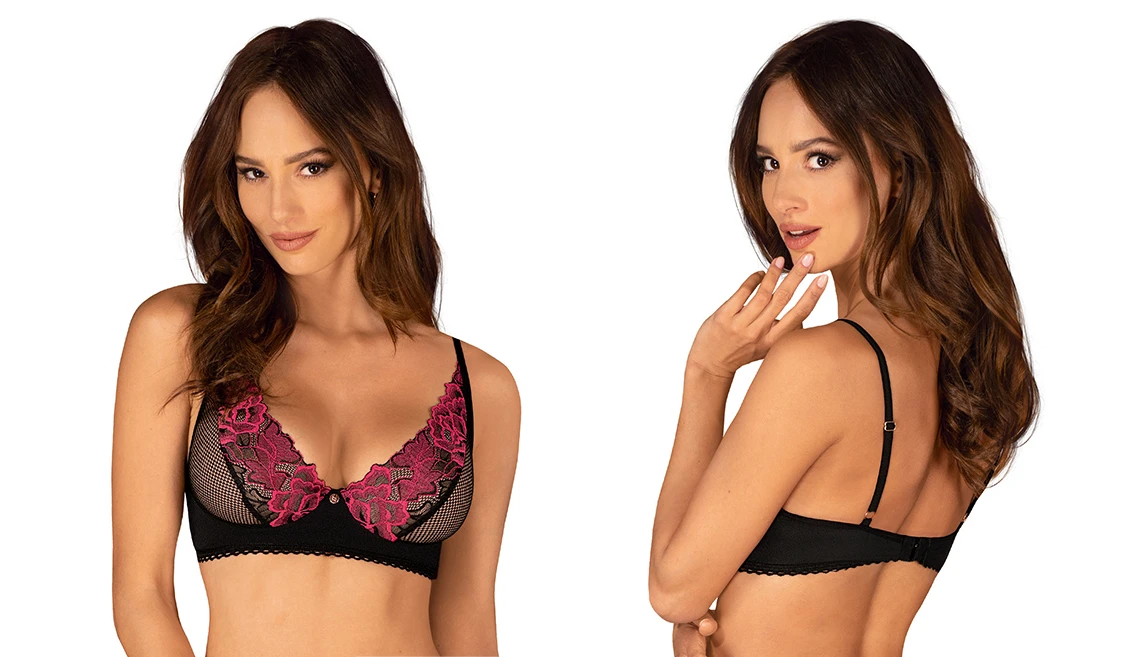
Choosing the right bra size is key to comfort and a perfect look. Our models are available in universal broken sizes — from XS/S to 2XL/3XL. Most bras are part of lingerie sets, but a few unique models are sold individually.
Before buying, check the size charts on product pages — you’ll find exact measurements for each style.
The tables below also help you choose your size more precisely and enjoy a perfect fit.
| US | UE | Bust Circumference | Underbust Circumference | Cup Size |
XS/S | 34/36 | 80-89 | 67-74 | A/B |
M/L | 38/40 | 90-99 | 75-82 | B/C |
XL/2XL | 42/44 | 100-109 | 83-90 | C/D |
| US | UE | Bust Circumference | Underbust Circumference | Cup Size |
S/M | 36/38 | 85-94 | 69-78 | A/B |
L/XL | 40/42 | 95-104 | 79-87 | B/C |
2XL/3XL | 44/46 | 105-114 | 88-95 | C/D |
How to turn a tag into comfort, shape, and confidence
Conscious cup selection starts with understanding that the letter works in tandem with the band, so look for balance between the two. The cup shape determines the neckline, so choose the style according to your clothes and breast projection. The fit test always beats the chart, so assess the center gore, cup edge, and underwire, not just the numbers.
Sister sizes act as a corrective lever, so use them without fear of changing the letter. Use your wearing experience as a compass, as comfort is the best guide for every figure. If the bra still feels supportive and free after several hours, you’ve found the perfect cup.
In this way, a bra becomes a tool for style, health, and confidence, not just another tag in the drawer.